Water Extraction in Metairie, LA
Standing water in a slab home has nowhere to drain. The extraction crew pulls it out with truck-mounted units, then the drying team goes after what soaked in.
(888) 417-5665Water still spreading? Get the extraction crew moving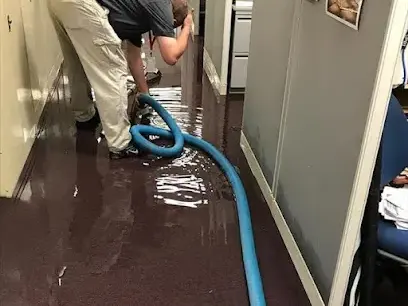
First steps for water extraction in Metairie
- Stop the sourceClose the main valve or the meter box shutoff, and switch off the water heater if it is involved.
- Make the room safeKill power to wet circuits only if the panel sits in a dry spot, and stay out of water near outlets.
- Photograph firstTake wide and close photos of every wet room before anything is moved or thrown out.
- Lift what you canMove rugs, electronics and furniture legs off wet floors, then call before the water reaches the subfloor.
How water extraction is handled in Metairie
- 1
Map the moisture
The tech who does the walkthrough maps moisture with pinless meters and thermal imaging before any equipment goes down.
- 2
Extract the water
The extraction crew pulls standing water with truck-mounted extraction so it leaves the building instead of moving to the next room.
- 3
Dry the structure
The drying team sets air movers to each room's evaporation load and runs LGR dehumidifiers with the house closed to the Gulf humidity.
- 4
Verify and document
Crews log readings daily and pull equipment only when the wet material sits within 2 to 4 points of a dry reference.
What does water extraction cost in Metairie, LA?
In Metairie, LA, water extraction typically runs $350 to $1,800 for the removal itself, depending on the square footage, the depth of the water, the flooring type and whether the water is clean, gray or black. Drying equipment is usually billed separately by the day.
Single room
- Up to about 250 square feet
- Clean water, carpet or tile
- Wand and pad extraction
Multi-room
- Hallways and adjoining rooms
- Weighted extraction on carpet
- Pad removal if needed
Contaminated water
- Storm or sewage water
- Porous flooring removed
- Antimicrobial after extraction
For a closer planning range, try the Metairie water damage cost calculator. The final scope comes from the on-site moisture map, not a phone guess.
How the extraction crew removes water in Metairie
Most Metairie homes sit on a concrete slab only a few inches above the street, so there is no basement or crawlspace for water to drain into. Whatever gets in stays on the floor and starts wicking into baseboards, drywall and the bottom of cabinets. Water extraction is the step that stops that climb.
The extraction crew starts with a walkthrough and a moisture map, because standing water is only the visible part. Pinless meters and thermal imaging show how far it traveled under flooring and behind trim. Then the crew works from the farthest wet room back toward the door.
- Truck-mounted units pull water out of the building instead of pushing it into the next room.
- Weighted extraction tools press water out of carpet and pad.
- Squeegees and submersible pumps handle deep water on tile, laminate and slab.
- Wet pad and saturated baseboards come out when readings say they cannot dry in place.
Why fast extraction matters on a slab
Concrete absorbs water slowly and releases it slowly. The longer water sits on a slab, the longer the drying phase runs, and in Gulf humidity that can add days. Mold can start inside 24 to 48 hours on wet organic materials, which is why the restoration team treats extraction as an emergency step rather than a scheduled one. EPA guidance on moisture in the home explains the same moisture window.
Clean water from a supply line starts as Category 1, but it picks up contamination from flooring and soil as it sits. Water that has been standing for a day or two is usually handled as Category 2.
What happens after the water is out
Extraction removes most of the water, and the rest is inside the materials. The drying team sets air movers and LGR dehumidifiers for structural drying, keeps the house closed to outdoor humidity and logs readings daily until the wet materials reach the drying goal. If the water came in from the street, the job follows the storm flood cleanup protocol instead, and Ready.gov flood safety steps covers what to avoid around floodwater.
Water Extraction across Metairie
The Metairie restoration crew covers every Metairie ZIP code, from the lakefront to Airline Drive.
The restoration team covers Metairie from Old Metairie and Bucktown to Fat City, Airline Park and Bissonet Plaza, plus Kenner, Harahan, River Ridge, Jefferson and Elmwood.
ZIP codes 70001, 70002, 70003, 70005 and 70006, and the rest of the Metairie ZIPs.
See every neighborhood and ZIP coveredRelated water damage services in Metairie
Water Extraction questions in Metairie, answered
How quickly should water be extracted?
As soon as possible. Water on a slab starts wicking into baseboards and drywall within hours, and mold can begin inside 24 to 48 hours on wet organic materials. Fast extraction shortens the whole drying phase.
Can a wet carpet be saved?
Often, if the water was clean and extraction starts early. The pad usually comes out because it holds water and is inexpensive to replace. Carpet touched by Category 3 water, such as sewage or street water, is removed.
Is a shop vacuum enough?
A shop vacuum removes surface water but not what is held in pad, subfloor or wall cavities. Truck-mounted extraction and a moisture map show what a shop vacuum leaves behind.
Does extraction include drying?
Extraction is the first step. Drying with air movers and dehumidifiers follows and is usually billed by the day until readings reach the drying goal.
What if the water came from the street?
Street and storm water is Category 3. The crew removes porous materials it touched and applies an EPA-registered antimicrobial after extraction.
Will homeowners insurance pay for extraction?
Extraction after a sudden, accidental leak is often part of a covered claim, while rising floodwater falls under flood coverage. Coverage depends on your policy, so it is worth checking with your own insurer.
Water Extraction in Metairie? Call now.
Standing water keeps moving into drywall, cabinets and subfloor. The restoration team extracts it, dries the structure to the IICRC S500 standard and documents every step for the claim.
(888) 417-5665Start the Metairie water removal now